⋆⁺₊⋆ ☀︎ ⋆⁺₊⋆
Ceratosaurus
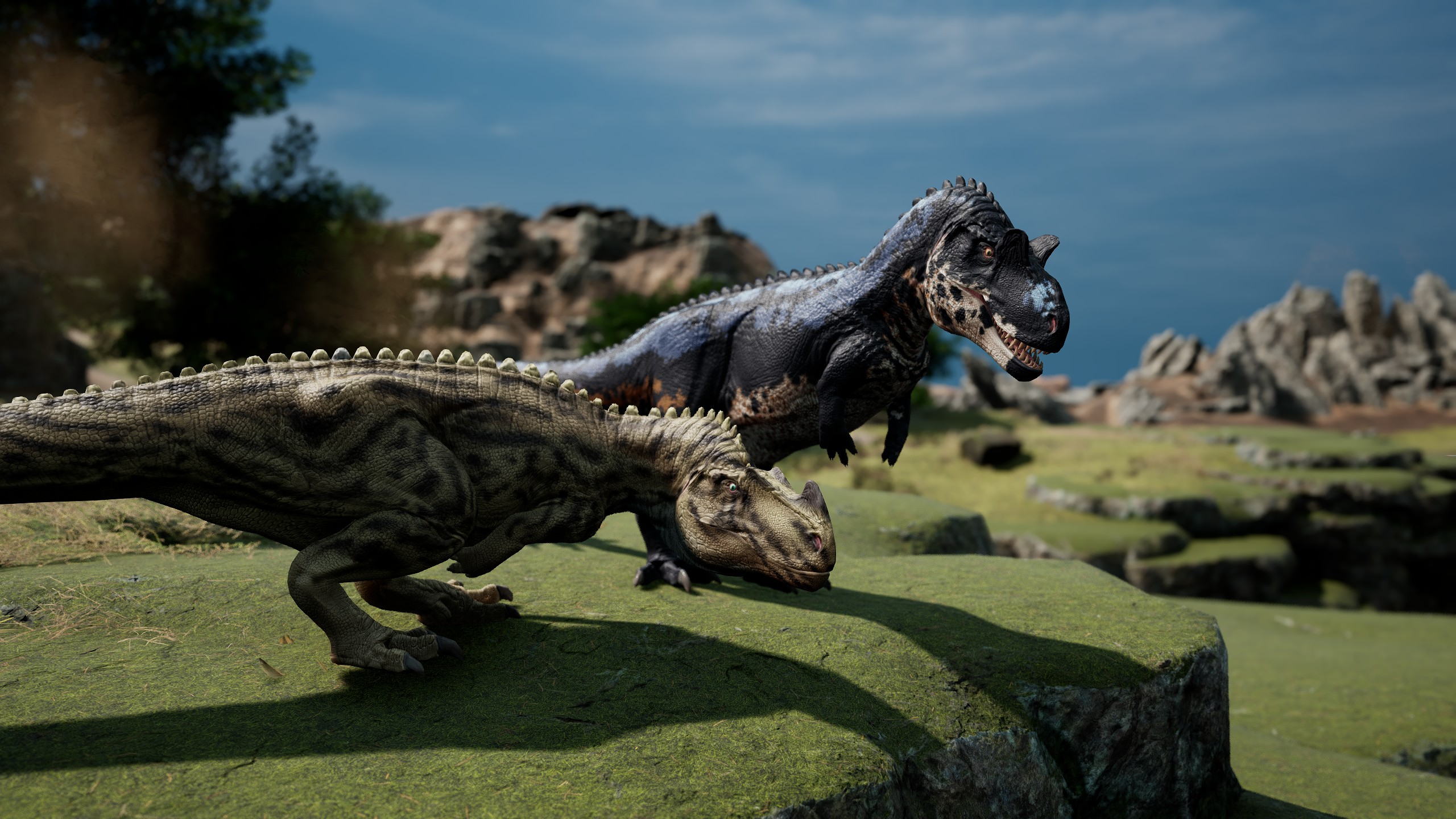
-
Highlights:
- Aggressive pecking order within the pack.
- Spend their time trailing herbivore herds.
⋆⁺₊⋆ ☀︎ ⋆⁺₊⋆
Group Limits
- Cackle
- Up to 6 Sub/Adult Ceratosaurus and any young they have.
Nest Limits
- Blooming Season: 6 eggs, 5-hour Interval
- Scorching Season: 2 eggs, 4-hour Interval
- Wilting Season: 4 eggs, 4-hour Interval
- Frosting Season: 2 eggs, 4-hour Interval
Sexual Dimorphism
- Reynards/Reys
- bigger crests on their heads, with darker and colder colours (blues, greens, black etc.)
- Suitable subspecies: Magnicornis & Dentisulcatus
- Vixen
- smaller crests on their heads, with brighter and warmer colors (Red, orange, white etc.)
- Suitable subspecies: Nasicornis
- Mutations
- Albinos and Melanistics are tolerated, but albinos are seen as a weak and fragile vixen, regardless of gender, and will not be accepted by any reynard for courting.
- Albinos are infertile regardless of gender.
- Melanistics are considered weaker reynards, and will have a harder time finding a mate, and melanistic vixen are considered reynards.
Habitat
- Nomadic
- Ceratosaurus prefers open plains and rocky mountains, but will keep tailing a herd into all biomes, unless another herd is present in a plains or mountain biome.
- Prefers: Valleys, Mountainous, Hills
- Dislikes: Marshland, Dense Woodland
Activity
- Cathemeral
- They spend their waking hours tailing herbivore herds from a distance, hunting critters and settling the hierarchy amongst the pack. They will take turns watching the herd, while the others are hunting critters, napping or squabbling amongst each other. The watcher will alert the pack if the herd starts moving, and will continue to follow until the herd stops or a better opportunity arises.
- Ceratosaurus utilize the night hours to build their nest and drink water, when most herbivore herds are asleep, and is a great opportunity to hatch their pups and be ready to move out with the herbivore herd when morning comes.
Diet
- General Carnivore, Food: Neutral, Scavenger
- They eat any easy meal being carrion, bones, fresh or noxious meat.
⋆⁺₊⋆ ☀︎ ⋆⁺₊⋆
Growing Behaviours
Hatchling
Ceratosaurus pups are quickly on their feet after hatching, calling out for their mother, who remains near the nest until all the eggs have hatched. She will encourage the babies to leave the nest quite quickly, being prepared to depart with the pack in case the herd is on the move, and might even shove the pups out of the nest if they aren’t leaving fast enough on their own. Ceratosaurus pups are very curious, and start to examine everything with their teeth, while following closely behind their mother for protection.Juvenile
The pups grow rapidly, and being rather rambunctious they will start chasing their siblings around, jumping up and down rocks, stumps or whatever is around them, learning to maneuver over, under and around objects, much to their parents' dismay who will lazily watch them tumbling around, while resting nearby, or wrangle them together while following the herd.Adolescent
Once the offspring hit adolescence, they start to mimic their parents behavior, following the parent of the same gender as themselves very closely. They also start to mimic the adults squabbling between themselves, play fighting each other, honing their bites and fast turns.Sub/Adult
The offspring have now fully matured, and learned what they needed from their parents, and if the pack is at its limit they will either disperse, or have their parents fight off unrelated members of the pack to make space for the offspring. If the offspring shared a special bond, either with a sibling or another pack member's offspring, they can choose to disperse together as a duo, in search of a steady food supply.Orphan Behaviours
- Orphaned pups are quick to adapt to their life of solitude, hunting critters and even resorting to eat bones and carcasses found on their travels, and tend to trail after any carnivores they might come across, in hopes of scavenging scraps from them.
- They will however instinctively run and hide at any sight of aggression from the carnivore they are following, and will not take second chances and return to it.
- Orphaned pups are a lot more skittish than pups born into a pack, and it can also affect their adult life, where they tend to be more submissive and evasive than other Ceratosaurus who grew up roughhousing with their siblings.
Social Behaviours
- Ceratosaurus are very social creatures when food is plenty and when raising their young, however this social behavior is strictly between their own species, as smaller carnivores are considered food, and bigger carnivores are seen as a threat.
- When it comes to food, they are very aggressive when it’s harder to come by, and the dominant Ceratosaurus team and their offspring will eat first, taking turns in their pecking order based on their constant squabbling in the downtime.
- Ceratosaurus, being boastful cowards, will never fight each other to the death, and will retreat and submit to a stronger, more experienced Ceratosaurus.
- These fights are always 1v1 and more often than not between the reynards/reys of the pairs. However the most dominant vixen of a sister pair will also take on a fight against a reynard/rey to secure a meal for them.
- If a Ceratosaurus kills a critter and isn't able to eat all of it, they will NOT bring food to others. It will allow their mate/duo and/or offspring to eat the leftovers once they’ve had their fill, if they approach on their own accord.
Interspecies Behaviours
- Ceratosaurus prioritise their own survival over anything else, and will flee from all carnivores that seems like a threat, especially their bigger cousin, the Allosaurus. However, if a pack of Ceratosaurus spots a lone Allosaurus, they will prioritize killing it above everything else, regardless of hunger. If other Allosaurus show up to its aid, they will quickly retreat, even leaving their offspring behind to save themselves.
Territorial Behaviours
- Ceratosaurus will not claim a territory, not even while nesting.
- Ceratosaurus only claim food sources and water ponds during scorching seasons.
- Ceratosaurus only claim ponds and one food resource (carrion, bones or a critter burrow) when nesting during scorching season.
- They will defend it against anything, but will retreat if the challenger is two sub-apexes, one apex or larger.
Hunting/Hunted Behaviours
- Ceratosaurus are lazy opportunistic scavengers that rarely engage in a hunt unless starving or faced with a supreme opportunity to snatch a baby, elderly and wounded dinosaur.
- They only take on healthy adults when in very desperate hunger.
Engagement Limits
- 3 in an engagement with up to sub-apex prey
- 4 Ceratosaurus are required in an engagement for apex and larger prey
- They cannot start hunts on apex prey if they don’t have 4 Cerosaurus to build a hunting party.
Courtship
- When food and resources are plentiful, the vixen will start getting more playful towards reynards/reys shoving them and nibbling at their tails. If the reynard/rey is interested in nesting with the vixen showing him interest, he will bring her an offering of food, to show that he is willing to share with her and their future offspring. This is the only time Ceratosaurus will bring food for each other, and is seen as a big personal sacrifice to forge a seasonal bond with each other.
⋆⁺₊⋆ ☀︎ ⋆⁺₊⋆
Notes
- -
Terms
- Reynard/Rey = A Sub/Adult Male.
- Vixen = A Sub/Adult Female.
- Pup = Below Sub-adult Ceratosaurus.
- Team = A mated pair of Ceratosaurus.
- Duo = A pair of siblings who are both unmated.
- Cackle = A group of 3 or more Ceratosaurus.
Stat Changes
- -
⋆⁺₊⋆ ☀︎ ⋆⁺₊⋆