⋆⁺₊⋆ ☀︎ ⋆⁺₊⋆
Dryosaurus
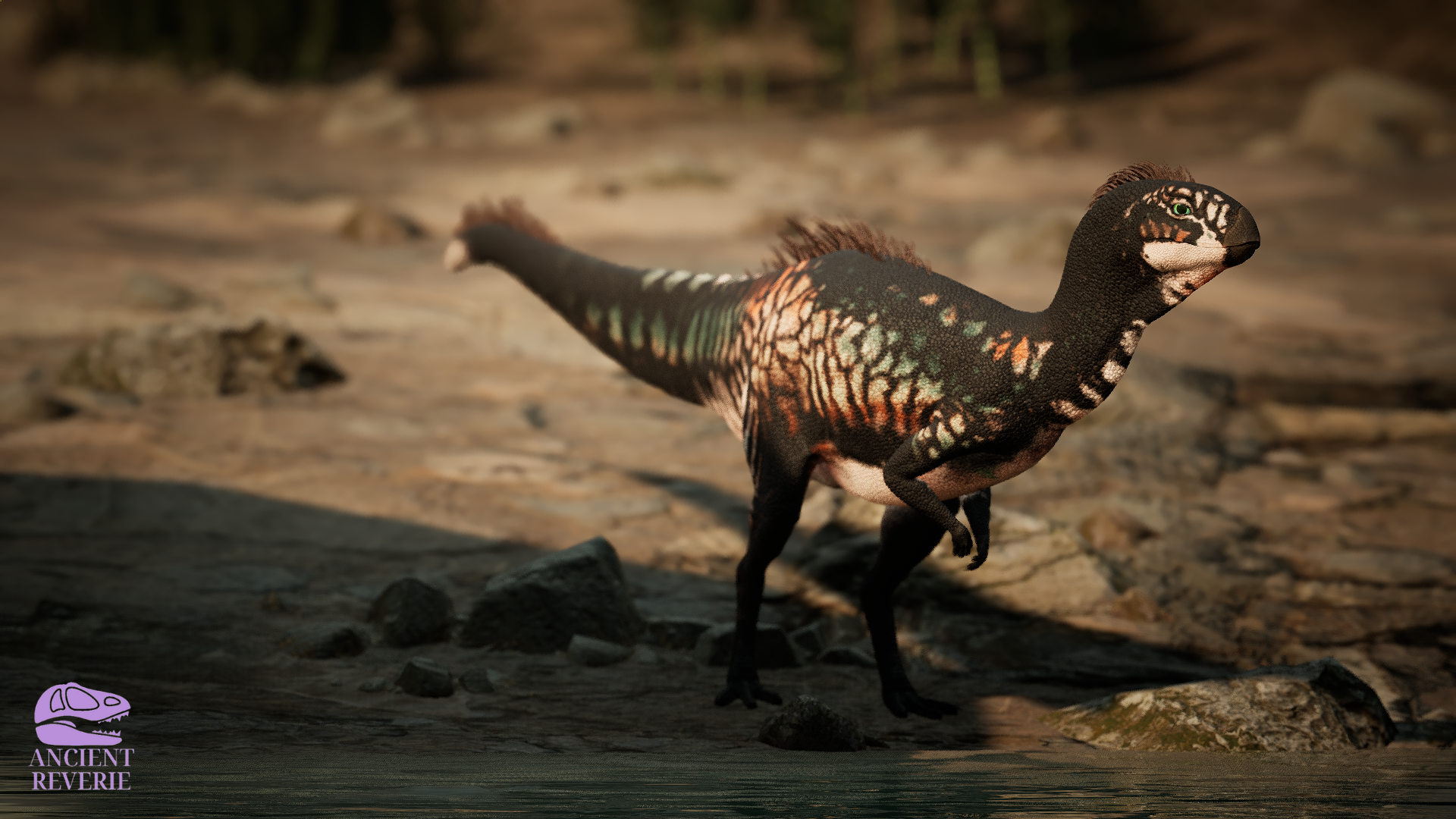
-
Highlights:
- Dryosaurus are extremely cautious, but form close bonds with those in their warren.
- They spend their time migrating, socialising, grazing and grooming each other.
⋆⁺₊⋆ ☀︎ ⋆⁺₊⋆
Group Limits
- Warren
- A group of up to 12 adult/sub-adult dryosaurus
- Unlimited offspring and adoptees
Nest Limits
- Blooming Season: 8 eggs, 1-hour Interval
- During the blooming season, dryosaurus are more fertile due to the plentiful resources.
- Scorching Season: 4 eggs, 2-hour Interval
- Due to the hot weather, dryosaurus’ fertility drops majorly. As the heat will deprive them of resources, they cannot maintain larger clutches.
- Wilting Season: 6 eggs, 1-hour Interval
- With cooler temperatures, dryosaurus have more fertility, and with plenty of rain they can maintain larger litters once more.
- Frosting Season: 2 eggs, 3-hour Interval
- Dryosaurus barely have any clutches during this cold season, as they spend most of their time moving to keep themselves warm, and need all the nutrition for themselves; they do not produce as many eggs.
Sexual Dimorphism
- Sexual Dimorphism is Mandatory.
- Buck
- Bucks greet other dryosaurus by repeatedly bobbing their heads and making chirping sounds. (Emote with the male symbol)
- Doe
- Does greet other dryosaurus by lifting their heads while chirping and then lowering them again. (Emote with the female symbol)
- Mutations
- There is no difference in treatment between normal individuals and individuals who are melanistic or albino.
Habitat
- Nomadic
- Dryosaurus spend their time moving from grazing ground to grazing ground. They often leave as soon as a potential threat is spotted, opting to move rather than to face the potential danger.
- As soon as leverets hatch, they are expected to be on their feet and moving. Those who aren't on their feet when the warren moves are seen as sickly and left behind.
- Prefers: Hills, Valleys, Desert, Mesa and Beach
- Neutral: Sparse Woodland and Mountainous
- Dislikes: Dense Woodland and Marshland
Activity
- Cathemeral
- Dryosaurus will spend most of their waking hours moving from place to place, only stopping in a spot long enough to graze, nest and drink before moving on. When dryosaurus settle down to sleep or rest, a sentry will stay awake to warn the warren of any potential threats. This is done by the sentry waking the warren with a loud panicked chirp.
Diet
- General Herbivore, Food: Passive, Ant-Eater
- Dryosaurus prefer a balanced diet of fruit, nuts, roots and insects, using these to keep their bodies properly energized and moving. A dryosaurus with an improper diet may experience lethargy and have higher chances of illnesses infecting them.
⋆⁺₊⋆ ☀︎ ⋆⁺₊⋆
Growing Behaviours
Hatchling
Leverets hatch fully mobile and ready to move with the warren, only needing a few moments to get to their feet. Leverets at this stage are incredibly wary and even the slightest sound will send them running back to their mother. Their waryness however does not stop them from being curious- they will slowly approach unfamiliar objects or dinosaurs, running back to the warren at the slightest sound or movement from their object of interest. Leverets mothers often let them roam around where the warren currently resides, though she always keeps a watchful eye over her young. Their fathers, while not as attentive, will also help rearing the leverets at this stage.Juvenile
Juvenile leverets, now free from their mothers ever watchful eye, will roam around the warren, playing games of chase or hide and seek together with others their age. Leverets at this stage are not as wary of their surroundings, and will only run off if the rest of the warren runs first, trusting that the older members have better judgement than them. They have lost their curiosity for other living creatures and now keep their distance from them like the adults of the warren do. While their mother still watches them, she isn't as careful as she once was, often leaving her leverets unsupervised while she grazes and socialises with the rest of the warren. However, if a threat approaches, she will find them and make sure they get to safety. The leverets’ father doesn't keep an eye on them anymore, often ignoring them completely in favor of socializing with others.Adolescent
At this stage, leverets will begin calming down from their playful behaviour. While some games of chase will still occasionally ensue, it is not nearly as often as before. Their curiosity has completely disappeared, now replaced by suspicion, though they still trust the older members of the warren to keep them safe. During this stage, the leverets mother starts to not watch them at all, treating them as if they were adults and ignoring them unless the warren flees. However, when the warren flees from a predator, only then will she find her leverets and make sure they get to safety.Sub/Adult
At this stage, a leverets playfulness has completely disappeared and they act like their adult counterparts, though small bouts of energy may still occur. Other adult members are quick to correct any reckless or ‘childish’ behaviour with a quick nip to the tail. Mothers now treat their leverets as adults, trusting them to take care of themselves. Even if faced with a threat, she will no longer collect them and make sure they are safe, as it is now their own responsibility.Orphan Behaviours
- Orphaned Leverets will, for a few moments after hatching, move around the nesting site, looking for their parents or warren. When they cannot find them, they will scurry into the foliage and remain hidden until they need to leave for food and water.
- After this point, leverets will start to wander, looking for a warren to take them in. If they encounter a threat, they will quickly run to the nearest cover, whether that be a cave or foliage, only to leave the cover once they are sure the threat is gone.
- If an orphaned leveret finds a warren, they will be communally raised. Every individual of the warren takes charge of keeping these orphans fed and safe from predators.
- Orphaned leverets who do not find a warren before sub-adulthood often grow into overly flighty individuals, running at the slightest startling sound. This is something they never grow out of, and will persist even after interaction with their own kind.
Social Behaviours
- Dryosaurus are a rather cautious species, however this same caution does not extend to those of their own species. New dryosaurus are accepted into warrens without any issues and are treated as if they have always been there.
- Dryosaurus socialize with each other by vocalizing, using their high pitched calls to display their emotions. They warn each other of threats using loud squeaks, express displeasure with aggressive calls and greet each other with soft chirps to show affection.
- Other than affectionate calls, they also show affection by cuddling close to each other when the warren settles to rest, and giving each other various different types of food they find.
- Dryosaurus can form close bonds with other individuals, closely bonded individuals can be seen sticking to each other's side during migration and showing each other food sources. Closely bonded individuals will remember each others favorite foods and if found, will bring them to each other as a treat.
- These close bonds are formed by familiarity, with dryosaurus who have traveled with each other for long stretches of time usually forming these bonds. They can be strengthened through affectionate displays, such as grooming, nuzzling or bringing each other food.
- If a bond happens to be between a buck and a doe, the doe may be more likely to accept him during courting, as she knows his temperament better than she would the other bucks in the warren.
- When dryosaurus warrens settle to rest, the members of the warren will relax and groom each other of the dust and bugs they have collected while migrating, closely bonded individuals are more likely to choose to groom each other than other dryosaurus.
- Dryosaurus have an extremely fragile neck, therefore only closely bonded individuals allow each other to groom that area.
- Closely bonded individuals will always go check to see if their friend is alright after they have fled from a hunt. If they find that their friend is injured, they will dote on them, cleaning their wounds and making sure they eat, even splitting off from the main warren to stay with their friend if they cannot keep up.
- If they find that their friend is dead, they may enter a mourning period, where they will not socialize with the rest of the warren, keep their distance during grooming sessions and walk a small distance away from the warren while migrating. This mourning period may last from 3 in-game days up to 3 seasons, depending on how close the two individuals were.
- While migrating, older dryosaurus will be found at the front, leading the group, younger adults that do not have leverets will be found at the back of the migrating warren, while mothers and their leverets are kept at the center of the warren.
Interspecies Behaviours
- Dryosaurus are a fearful species, running from anything bigger than them. This makes them rather intolerant of most other species, especially carnivores. They see all carnivores as a threat and will choose to leave the area when carnivores of any size are spotted.
- Dryosaurus will avoid areas where many other species reside purposefully. They will take other routes, even if they are more difficult.
Territorial Behaviours
- Dryosaurus may never accept challenges and will always choose to leave rather than fight.
Hunting/Hunted Behaviours
- When hunted, dryosaurus’ first reaction is always to flee. Only mothers may momentarily stay behind to locate their leverets, before fleeing with them.
Engagement Limits
- Up to 6 dryosaurus may help defend a cornered member of the warren, though they will flee as soon as the cornered individual can get away.
Courtship
- Nest-Bound
- Bucks always initiate courting.
- When a buck wishes to court a doe, he will approach her with food, putting it down in front of her as an offering. If the doe is interested in courting, she will accept the gift by either eating it if she is hungry, or picking it up in her mouth.
- If she does not accept she will simply walk away and ignore the food offered to her.
- Afterwards, the buck will start trying to impress the doe. This is done by jumping into the air and running circles around the doe to show off agility.
- Bucks with less scars are more attractive, as it shows that they can outrun predators.
- If the doe accepts, she will walk up to him and nuzzle his neck.
- If she does not accept she will walk away.
⋆⁺₊⋆ ☀︎ ⋆⁺₊⋆
Notes
- Dryosaurus may only defend members of their warren if one of them is cornered and unable to flee.
Terms
- Bucks = Adult/sub-adult males
- Does = Adult/sub-adult females
- Leverets = Individuals below sub-adult age
Stat Changes
- -
⋆⁺₊⋆ ☀︎ ⋆⁺₊⋆