⋆⁺₊⋆ ☀︎ ⋆⁺₊⋆
Quetzalcoatlus
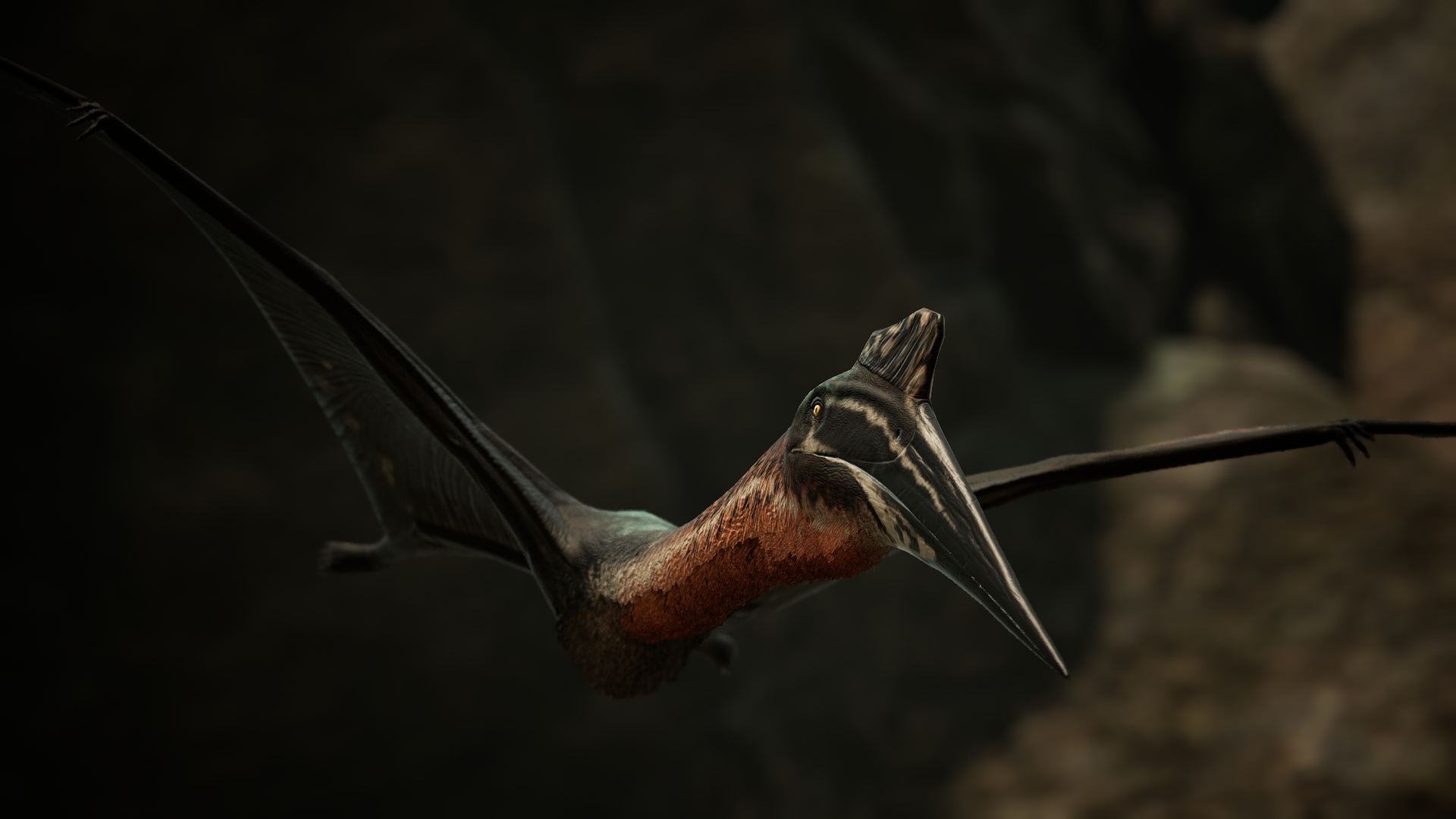
-
Highlights:
- Quetzalcoatlus thrive in great heights and fight for the highest nesting places.
- While males are pretty boisterous, females are more reserved and quiet.
⋆⁺₊⋆ ☀︎ ⋆⁺₊⋆
Group Limits
- Thunder
- up to 5 unmated male Quetzalcoatlus
- Glide
- up to 5 unmated female Quetzalcoatlus
- Drift
- 2 mated pairs of Quetzalcoatlus
- Bond
- a mated pair of Quetzalcoatlus
Nest Limits
- Blooming Season: 1 eggs, 5-hour Interval
- Scorching Season: 4 eggs, 3-hour Interval
- Quetzalcoatlus thrive during scorching season, as it is the season with the most thunderstorms and also the best time for feeding off of those that have died of thirst in the long drought between rain periods.
- Wilting Season: 3 eggs, 3-hour Interval
- Frosting Season: 2 eggs, 3-hour Interval
Sexual Dimorphism
- Sexual Dimorphism is Mandatory.
- Males
- have a bigger crest on their head.
- are a lot more noisy compared to females, especially when they aren’t mated.
- Suitable subspecies: northropi “Large Crest”, “Stocky” and “Variation”
- Females
- have a small crest on their head.
- are very silent and rarely draw attention with broadcasts or chatter when near other species.
- Suitable subspecies: northropi “Balanced” and “Featherless”
- Mutations
- Albinos are too weak to fly and are bound to the ground, which makes them an easy target for a lot of other carnivores and usually shortens their lifespan tremendously.
- Melanistics don’t face any backdraws.
Habitat
- Nomadic
- Male Quetzals turn temporarily sedentary if they want to court.
- Quetzalcoatlus are the high flyers of Gondwa. Whenever an aerial dinosaur flies high - they will fly higher.
- They love a good view and are known to enjoy sunsets from high located vantage points.
- Quetzalcoatlus travel high above ground, just about low enough to make out prey below and always keep a lookout for the next high ground for rest.
- They live on the highest mountain peaks the land can offer and avoid forested areas at all costs.
- Prefers: Mountainous, Mesa
- Dislikes: Dense Woodlands
Activity
- Cathemeral
- Quetzalcoatlus take multiple naps per day, spread out over both day and night.
- During the day, they prefer to travel and socialise.
- Hunts are preferably carried out at night or during storms, though if a chance for scavenging or small and easy prey opens up during the day, they won’t hesitate to make use of it.
Diet
- General Carnivore, Food: Neutral
- While reliant on fresh meat to support their growth during their first stages of life, Quetzalcoatlus learn how to digest other kinds of food sources like carrion, bones and even obnoxious meat later in life.
- They prefer scavenging over hunting, except when an easy meal like offspring, elderly or injured prey offers itself.
⋆⁺₊⋆ ☀︎ ⋆⁺₊⋆
Growing Behaviours
Hatchling
Born into a wind-scourged area high above ground, the blind and featherless hatchlings stay put in their sheltered nest and quickly start screaming for food.Their parents are fast to respond and continuously deliver meat pieces for their offspring.
Despite their fast development and quick growth of feathers in this stage, they cannot fly yet. In case they fall out of the nest or off of their high ground where they hatched, they have to hope for their parents to continue caring for them. Instinctively, they try to hide somewhere close to the nest. If the missing hatchling is noticed by the parents and they decide to continue their care for it, one parent usually keeps an eye on where the fallen hatchling stays so as not to lose it.
If the hatchling is an only child, the chances are high that the parents will keep feeding and caring for it, even once it’s on the ground.
Juvenile
Having started to grow their feathers now, the young Quetzalcoatlus start to become more mobile.They show eagerness to leave the nest once they feel ready and either dare the jump into the deep voluntarily or are helped along by the parents. Most of the offspring instinctively manage to fly or glide down clumsily and try to land in water to soften the impact, while some weaker hatchlings straight up fall down.
Because Quetzalcoatlus offspring grow quickly, they often can’t catch up with their own growth, which leads to them being quite clumsy and struggling to control their massive wingspan.
Only during their juvenile stage and adolescence they learn how to control their wings expertly, but only after many testflights and -glides from higher grounds which they have climbed by foot, and watching their parents fly.
Adolescent
Should an adolescent not have dared the jump out of their nest yet, they will be forcefully pushed off the nesting place by their parents.Albino Quetzalcoatlus younglings are usually hesitant to jump, and that for a good reason. They are weaker and smaller than their siblings and will never manage to get enough strength in their wings to lift themselves off the ground. If they manage to survive the fall, they will be stuck on the ground from there on. Some flight attempts might be done once in a while, but don’t yield much result. The best they can do is usually fly up a rock or small ledges or glide down from places once they have reached adulthood and their wings have strengthened a little more anyhow.
Males will become more boisterous during adolescence, heckling their siblings and turning more noisy.
Females however become rather quiet and dignified and prefer to socialise among each other.
Sub/Adult
Turning sub-adult, the offspring starts to leave one by one or form Thunders or Glides together.They are now full adults and go their own way, leaving their parents behind to discover the world on their own.
They don’t maintain tight bonds with their family, but recognise them and usually avoid starting fights over nests with them if they ever do meet again.
Orphan Behaviours
- Orphans scream for food as any other offspring would do in their first moments of life. Once they realise that no one is coming to feed them, they will turn quiet.
- Without an adult to encourage them to take a first glide down from the nest and after that, show them how to fly properly, orphans take longer time to take off.
- Should they be born on the ground, they may never learn to fly properly and have minor motoric issues all their life.
- Orphans born on higher ground have better chances, since they have to dare the jump from their place of birth. This activates their natural instincts to open their wings and glide toward the ground, and encourages them to explore their wings’ capabilities more in the long run. They don’t face any motoric challenges later on.
Social Behaviours
- Male, and rarely also female Quetzalcoatlus are relatively boisterous and only become calmer once they have found a mate.
- Unmated males often group up in Thunders to travel together, but don’t form close relations and are quick to squabble with each other.
- Females pose the antipole of the males. Once mated, their calm demeanor is conveyed to their male partner.
- Quetzalcoatlus find great delight in stormy weather.
- This goes so far that even the usually quiet females start to chatter and relish the sound of thunder in the distance.
- The clouds darkening the lands during storms help to hide their shadows from above and the thunder covers the powerful resounding of the Quetzals' wings. It’s the perfect opportunity for ambushes and inspires the Quetzalcoatlus to hunt, no matter the time of day.
- Friendly relations to other Bonds grow only slowly.
- They often coexist beside each other and gain each other's trust for a while, before forming a Drift together.
- Drifts usually form during nesting, but may persist for a long period after that.
- Quetzalcoatlus spend much of their downtime on high grounds to adore the view and often try to get their partner to follow them to a, what they think, especially nice place to enjoy the sunset in twosomeness.
Interspecies Behaviours
- Quetzalcoatlus habitually spectate other species from some distance, usually while flying far above or from some high ground in a safe distance from the other species - often unseen during night times. This behaviour is seen when hunting, but is also executed to study different species and their habits.
Territorial Behaviours
- Quetzalcoatlus are not territorial except when males defend their nest against competitors.
- Drifts often help each other to defend their nests against the frisky unmated males.
Hunting/Hunted Behaviours
- Preconditions
- Quetzalcoatlus only hunt prey of medium size and below, offspring and larger prey on deathscars.
- Hunts for prey or challenges for bodies only happen during the night when the darkness covers their shadows, during thunder storms or when in desperate hunger.
- Scavenging may be done at any time of day.
- They only challenge medium or smaller sized species for their body.
- Quetzalcoatlus scout for food from above. While most of them stay quiet to not be noticed, males in a Thunder don’t bother too much with a quiet approach and are often heard from miles away.
- Once a target is found, they dive down and try to make quick process with their prey.
- While the engaged Quetzalcoatlus fight, the rest of the group circles in the air above them.
- When hunted, Quetzalcoatlus only fight back if the attacker is of medium size or below. Otherwise, they flee.
Engagement Limits
- 2 Quetzalcoatlus when hunting or being hunted.
- 1 Quetzalcoatlus when attacking a nest, 4 Quetzalcoatlus (1 Drift) when defending nests.
Courtship
- Seasonal Monogamy
- When males feel like they are ready for a mate, they seek out the highest possible place in their preferred POI and build their nest there.
- Females value a good view from their nest and therefore favour males that have built the nest higher than the others.
- Because the males always pick the highest point in a region, it is common for Quetzalcoatlus to have nesting hotspots and encounter each other there.
- In many cases, males strive to claim the best spot for their nest and will therefore even resort to pushing offspring out of another Quetzal's nest and destroy it if they want to claim the spot for themselves.
- If the nest is not guarded by an adult Quetzalcoatlus, he will push any remaining offspring out of the nest and destroy the nest to place his own.
- If the nest is guarded by one adult, he may start a pushing fight with such. These fights are knockback-fights. The competitors try to push each other down from the elevated location of the nest. The first to be pushed down and not be able to get back to the battle ground within 5 seconds loses the fight over the nesting ground and has to surrender it to the winner.
- If the nest is guarded by a Bond or even a Drift, the challenging male may still try to fight them, but in most cases knows it’s a lost cause. In that case he will pick the next best spot.
- If there are alternative locations of equal or almost equal height, the male will choose to build the nest on the nearby spot instead and mostly ignore the other Quetzalcoatlus.
- If the male already has a mate and is only looking for a nesting spot, he won’t need to put as much effort into picking the highest spot, though he still risks being abandoned if the female is unhappy with his choice.
- When a Thunder decides to settle together in one area to build nests, it can turn chaotic. Each male will fight for the highest spot, which can result in multiple males fighting together for the same nesting ground.
- The last remaining Quetzalcoatlus male is the winner and is allowed to build his nest on the contested ground.
- Once a nest is built, the male will become even more noisy than usual, broadcasting his willingness to court and thereby attract females.
- Females that find the nest location appealing, will fly up to the male, chatter for a short moment and start to fly straight upwards and high above his nest.
- If the male is interested aswell, he will follow her.
- They will enjoy the view from up above and scan the area for a moment, before the female initiates a dive back down to the nest and the male will follow.
- At this point, males that were originally in a Thunder will leave their pack and form a Bond with the female instead.
- As long as they have a partner, males become calmer as to not attract the attention of predators or other unmated males.
- During the rearing of the offspring, the Bond works together on bringing food and defending the nest.
- Drifts can form during this time aswell. Neighboring Bonds that are well-disposed to each other may even start to bring superfluous food to the neighboring nest if they see them struggling to feed their offspring.
⋆⁺₊⋆ ☀︎ ⋆⁺₊⋆
Notes
- Males may not destroy the nests of other males while they are committing the courting ritual.
- Two or more males are only allowed in fights over nests within their own Thunder. Males outside of the Thunder may only be challenged for nests by one male at a time.
Terms
- -
Stat Changes
- -
⋆⁺₊⋆ ☀︎ ⋆⁺₊⋆